
Beaujolais Uncorked: A Smarter Way to Understand France’s Most Misjudged Region
- Posted on
- By Tim Graham
- Posted in beaujolais, Beaujolais Nouveau, Beujolais Villages, Brouilly, Cote du Brouilly, Cru Beaujolais, Fleurie, france, Gamay, Morgon
Discover the Beaujolais wine region in France—its Crus, winemaking styles, terroir, and why it deserves far more respect than it gets.
Why Beaujolais Deserves Your Attention
Beaujolais sits just south of Burgundy, but it rarely gets the same level of respect—and that’s exactly why it’s worth your time.
Most people still associate the region with Beaujolais Nouveau: light, fruity, and gone almost as quickly as it arrives. But that’s only one small piece of the picture. Spend a little time here (or in your glass), and you’ll find wines that range from bright and effortless to structured, savory, and surprisingly age-worthy.
What makes Beaujolais interesting isn’t just Gamay—it’s how dramatically it changes depending on where it’s grown and how it’s made. This is a region of contrasts: easygoing but not simple, affordable but often serious, and, at its best, every bit as compelling as its famous northern neighbor.
The Four Faces of Beaujolais
Beaujolais is relatively straightforward on paper, but the style shift between categories is where things get interesting.
Beaujolais (Regional)
This is the entry point, mostly from the flatter, more fertile south. The wines are light, juicy, and meant to be opened without overthinking it. Think red cherry, a little raspberry, soft tannins—perfect for a weeknight or a slight chill.
Beaujolais-Villages
A step up, mostly from the north, where soils start to change and wines gain a bit more shape. You still get freshness, but there’s more depth and structure. This is often the sweet spot for value.
Cru Beaujolais
This is where people start to change their minds about the region. The ten crus—Morgon, Fleurie, Moulin-à-Vent, and the rest—each have their own identity. These wines can be floral, earthy, structured, or even a little Burgundian in feel. Many can age, and some absolutely should.
Beaujolais Nouveau
Released every November with plenty of fanfare, Nouveau is all about immediacy—fresh fruit, low tannin, and pure drinkability. It’s fun, but it’s not the benchmark for what Beaujolais can do.
What’s Actually Happening in the Winery
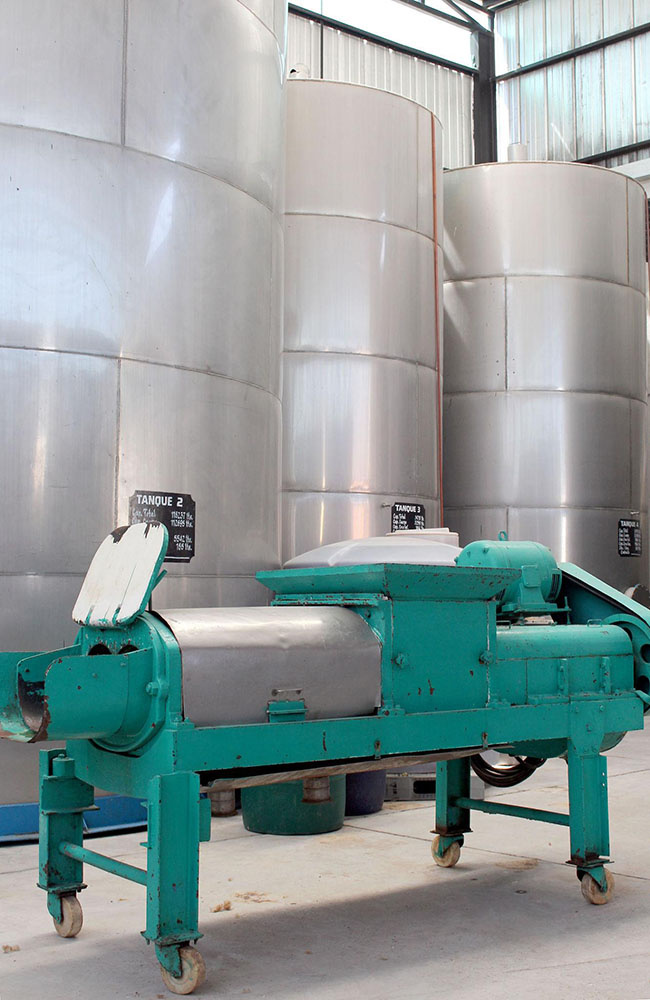
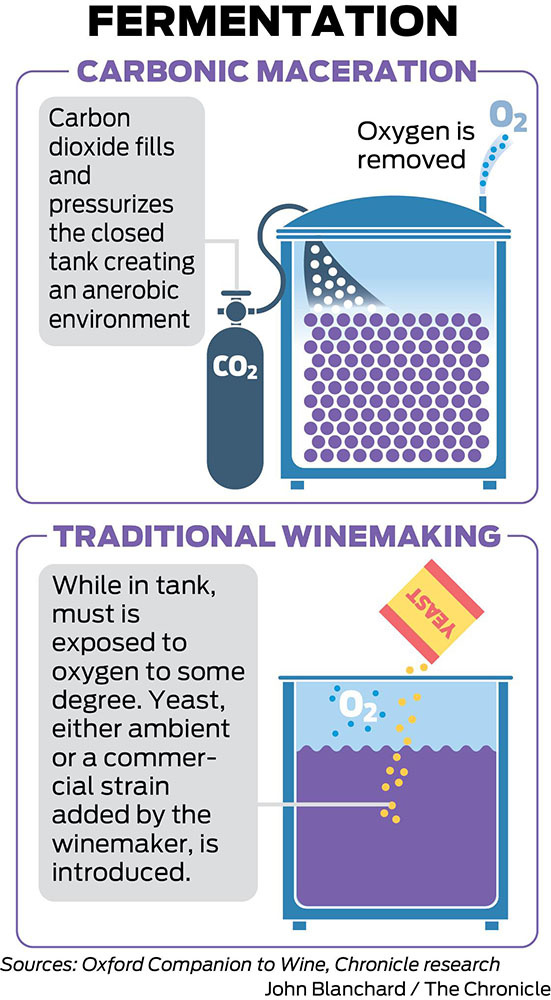
The signature technique here is carbonic maceration—or, more often in quality-focused wines, semi-carbonic maceration.
Carbonic maceration involves fermenting whole clusters in a sealed, CO₂-rich environment. Fermentation begins inside the berries themselves, which gives you that lifted fruit, soft texture, and low tannin. It’s the reason many Beaujolais wines feel so effortless to drink.
Semi-carbonic maceration is the more common real-world version. Some grapes at the bottom get crushed and ferment normally, producing CO₂ that triggers intracellular fermentation in the intact berries above. The result is a balance: freshness from carbonic, plus a bit more structure and depth.
At the top end, especially in certain crus, some producers lean toward more Burgundian methods—destemming, longer macerations, and oak. That’s where Gamay starts to show a more serious, age-worthy side.
A Quick Note on Classification
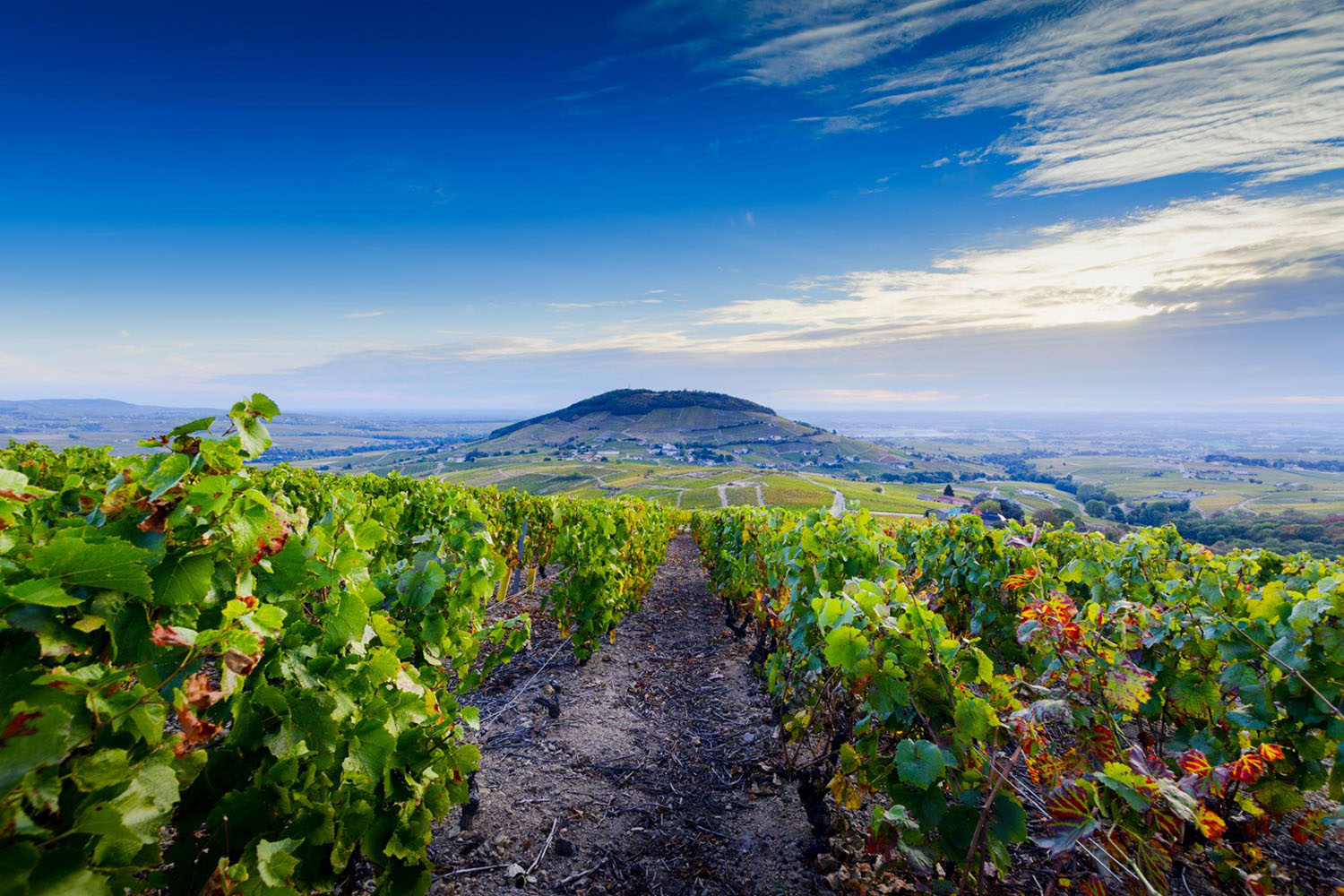
Compared to Burgundy, Beaujolais is refreshingly simple:
-
Beaujolais AOC: broad, regional wines
-
Beaujolais-Villages AOC: more specific, generally higher quality
-
Cru Beaujolais: ten named areas, each its own appellation
One important distinction: in Beaujolais, “cru” refers to entire zones, not individual vineyards. So when you see “Morgon” or “Fleurie” on a label, that is the appellation.
Why Terroir Matters More Than People Think
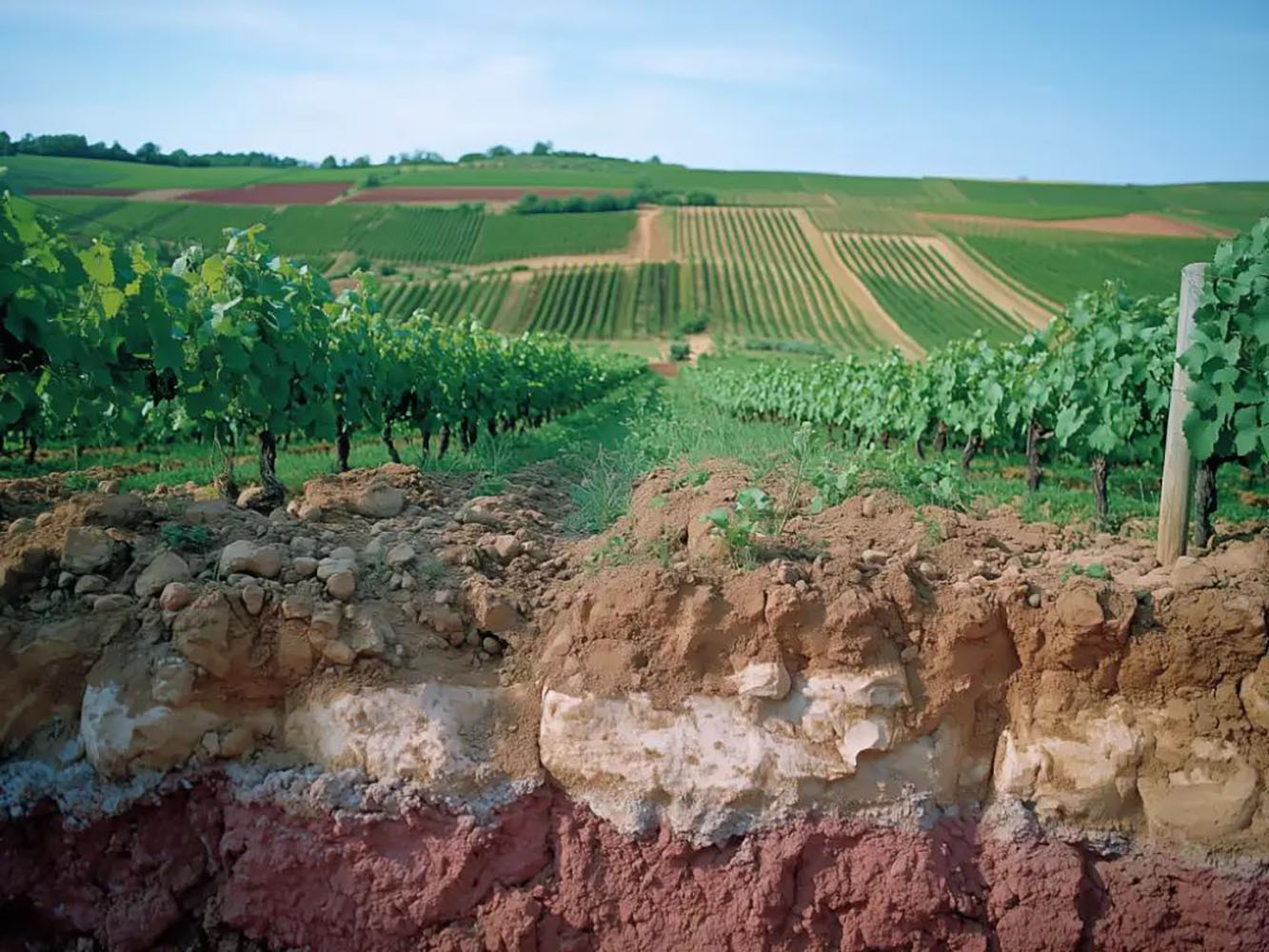
If you want to understand Beaujolais, follow the soils.
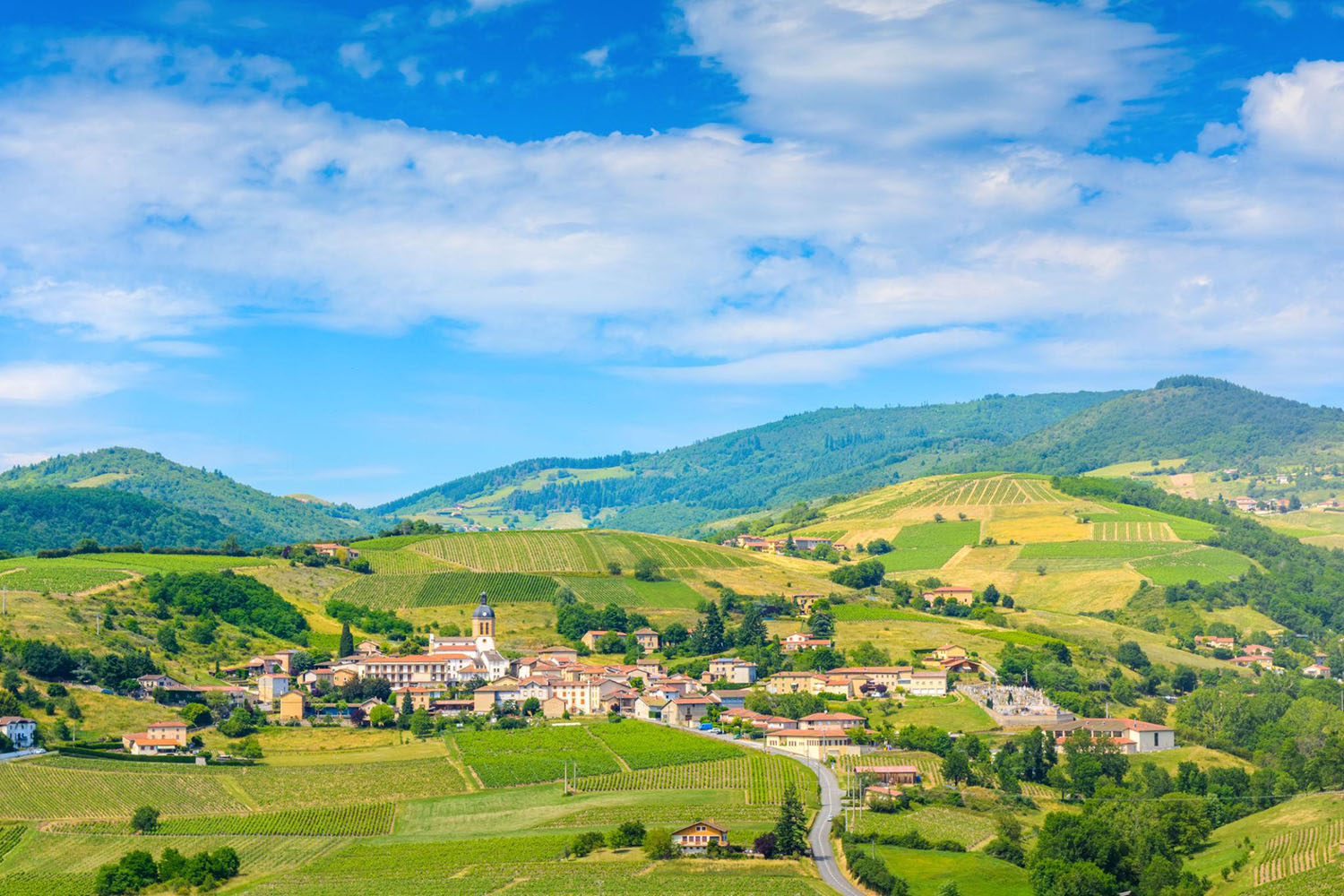
In the south, you’re mostly dealing with clay and limestone, which tends to produce softer, fruit-forward wines. As you move north, granite and schist take over—and everything changes. The wines gain structure, minerality, and a more defined sense of place.
That’s why a Morgon (especially from Côte du Py) often shows darker fruit and a firmer backbone, while Fleurie leans more toward lifted aromatics and finesse. Same grape, completely different expression.
If You’re Visiting
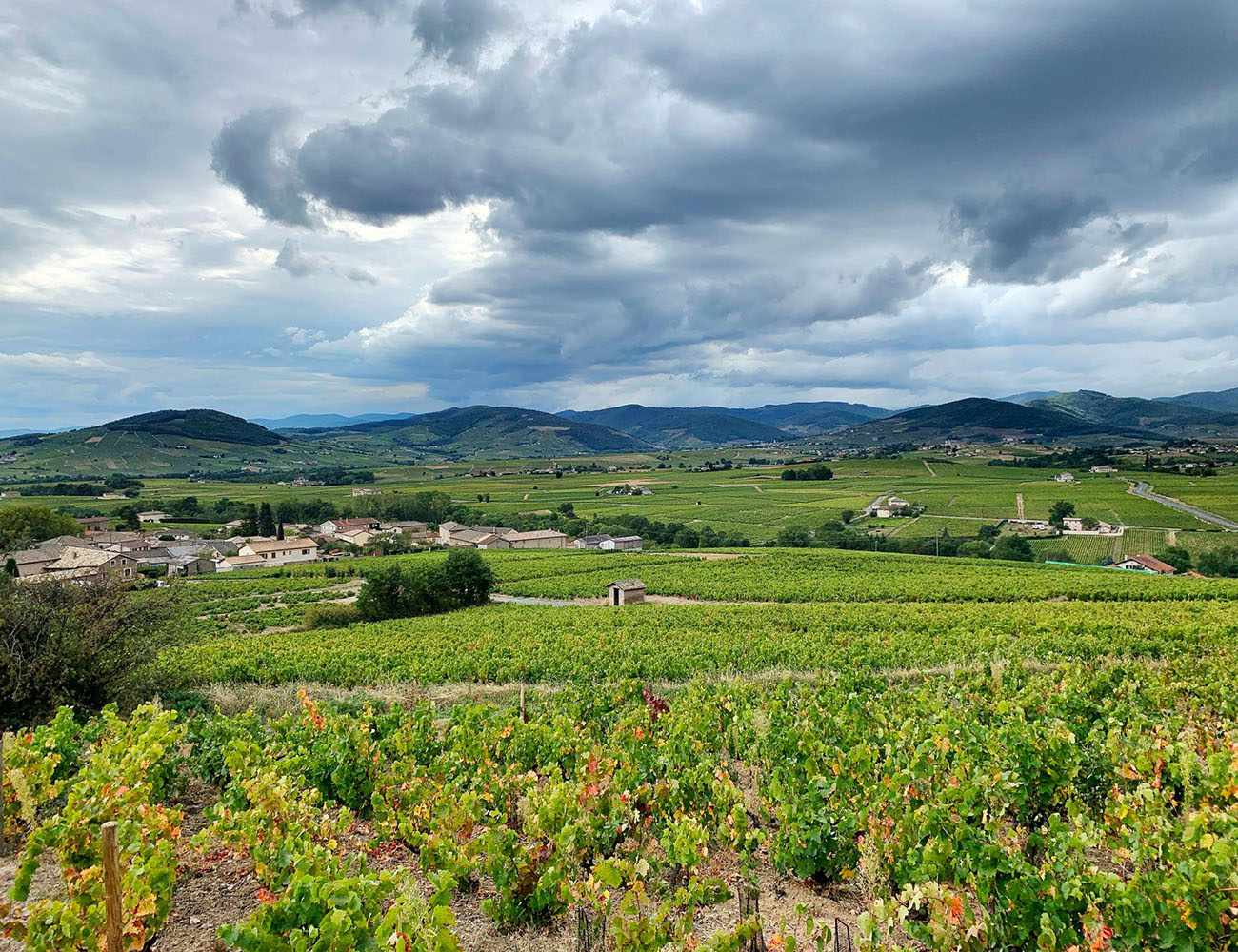
Beaujolais is one of the most enjoyable wine regions to explore—less polished than Burgundy, but more relaxed and approachable.
-
Villefranche-sur-Saône makes a great base, with easy access to the vineyards
-
Mont Brouilly offers one of the best views in the region (and a real sense of the terrain)
-
Fleurie is as pretty as it sounds, with wines to match
-
Morgon, especially around Côte du Py, is essential if you want to understand the region at its most serious
-
The Beaujolais Wine Route ties it all together with rolling hills, small villages, and plenty of cellar doors
How to Get the Most Out of Beaujolais
A few small adjustments make a big difference:
-
Chill it slightly. Even cru Beaujolais shows better with a light chill—around 15 minutes in the fridge is usually perfect.
-
Read the label. If you see a cru name, you’re in more structured, age-worthy territory.
-
Don’t stop at Nouveau. It’s fun, but it’s not the full story.
-
Pay attention to producers. The gap between basic and exceptional can come down to who made the wine.
Why It’s Worth Revisiting
Beaujolais is easy to underestimate—and that’s part of its charm.
You can drink it casually, or you can dig into the nuances of terroir, élevage, and cru character. Either way, it delivers. And in a world where many classic regions are becoming harder to access (or justify), Beaujolais still offers both quality and value.
If you haven’t looked at it seriously in a while, it’s probably time to come back to it.