
Piedmont: Italy's Quiet Giant
- Posted on
- By Tim Graham
- Posted in Barbaresco, Barbera, barolo, Dolcetto, italy, Moscato, Nebbiolo, Piedmont, Piemonte
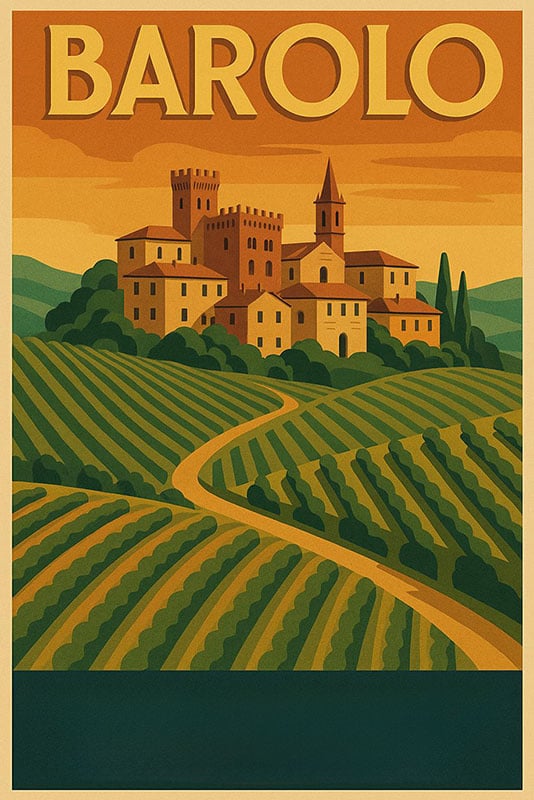
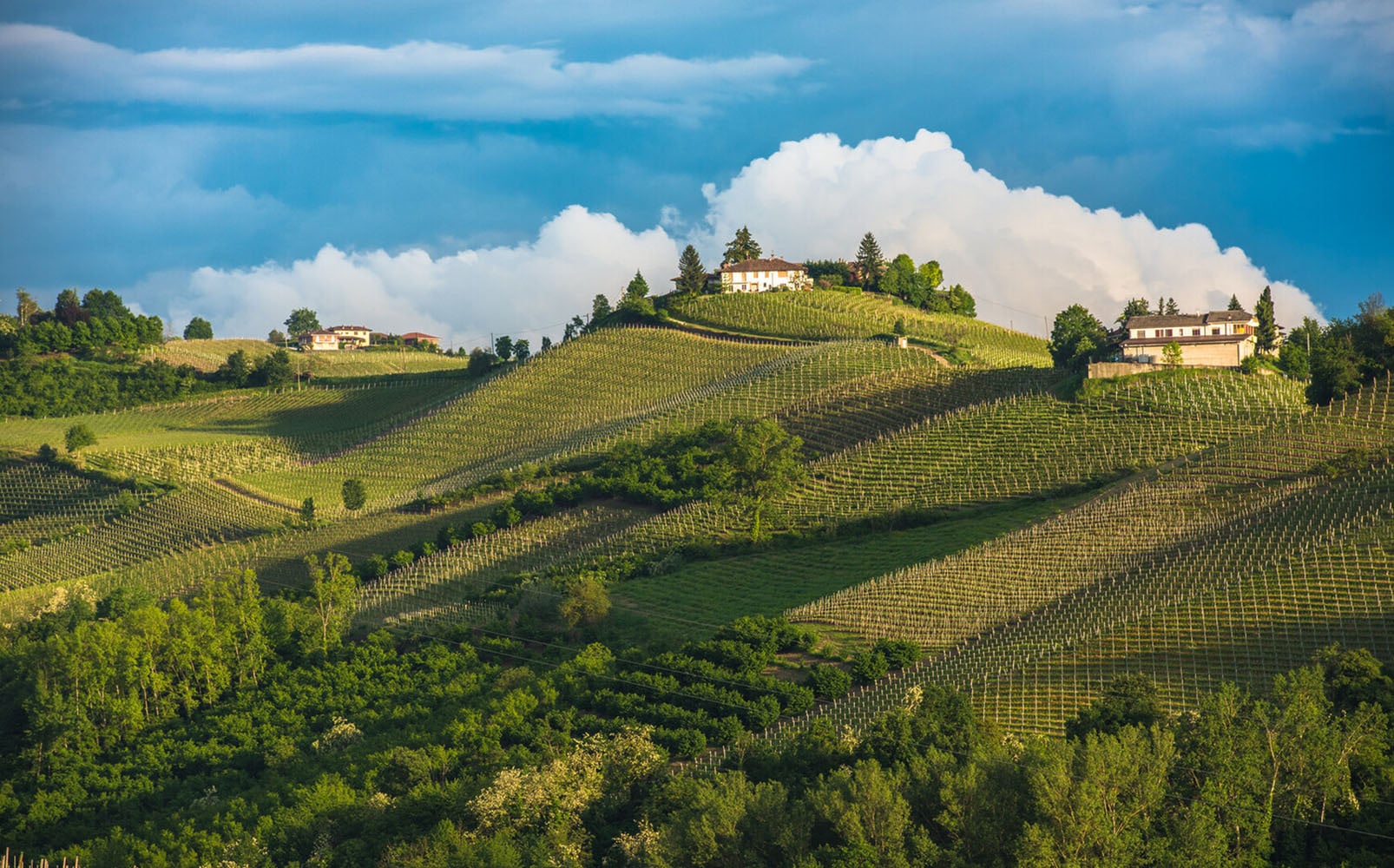
Tucked into Italy's northwest corner, where the Alps curl around a sea of hills, sits a region that doesn't shout. Tuscany has the postcards. Piedmont has the wine. Its name literally means "foot of the mountain," and that geography explains almost everything about what ends up in your glass here: cool air spilling down from the peaks, fog pooling in the valleys at harvest, and slopes angled just right to catch the last of the warm autumn sun.
A History Written by Kings and Fog
Winemaking here is old. Really old. Nebbiolo, the region's noble red grape, shows up in written records at the castle of Rivoli in 1266, and by 1431 the village of La Morra was fining anyone who dared cut down a Nebbiolo vine. That's not a wine culture. That's a wine religion.
Here's the twist most people don't know: Barolo, today one of the most serious, structured red wines on earth, was probably sweet until the mid-1800. Nebbiolo ripens so late, often not until mid-to-late October, that fermentations would stall in the cold cellars before all the sugar converted. The wine that emerged was rich and a little sticky, and the aristocracy loved it that way.
What changed it was politics. Piedmont was the engine room of the Risorgimento, the movement that unified Italy in 1861, and the men driving it, Cavour & Garibaldi, happened to be vineyard owners . They wanted a wine that could sit at the same table as Bordeaux and Burgundy. Nebbiolo was reworked into a dry, age-worthy red, bottled on its own rather than blended into the field-blend soup that was typical at the time. Italy's greatest red wine, in other words, was partly a nation-building project.
Nebbiolo: The Grape That Plays Hard to Get
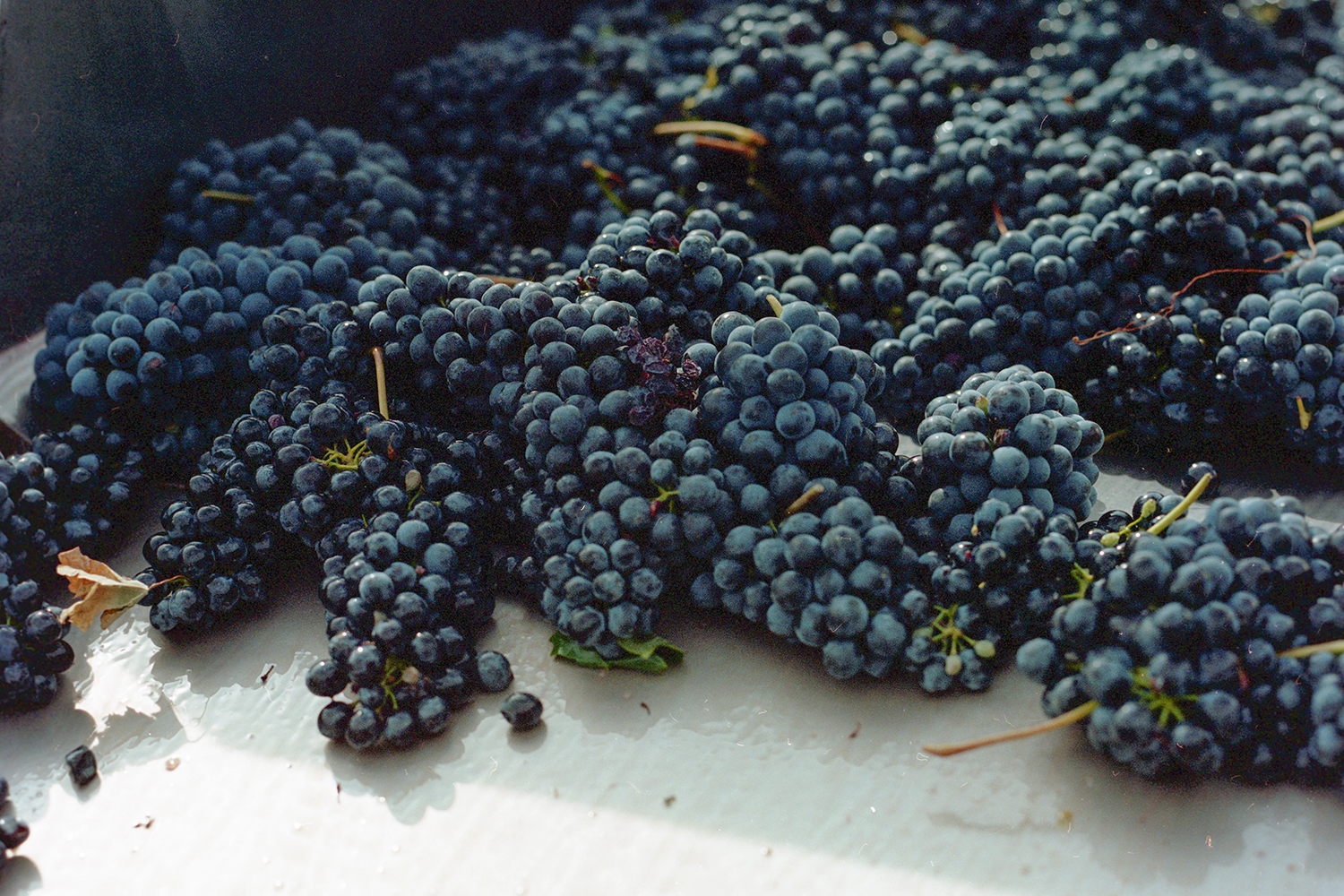
Nebbiolo is one of those grapes that seems designed to frustrate the people who grow it. It buds early, making it vulnerable to spring frost, then ripens dead last, hanging on the vine into the fog of late October. Its name likely nods to that fog — nebbia — that blankets the Langhe hills at harvest.
In the glass, it's a beautiful contradiction. The color is often pale, garnet, almost delicate-looking, but then you taste it and get a wall of tannin and acidity. The classic aroma description is "tar and roses," which sounds absurd until you smell it and realize it's exactly right. Add dried cherry, truffle, dried herbs, leather, and something faintly like anise.
Its two great expressions:
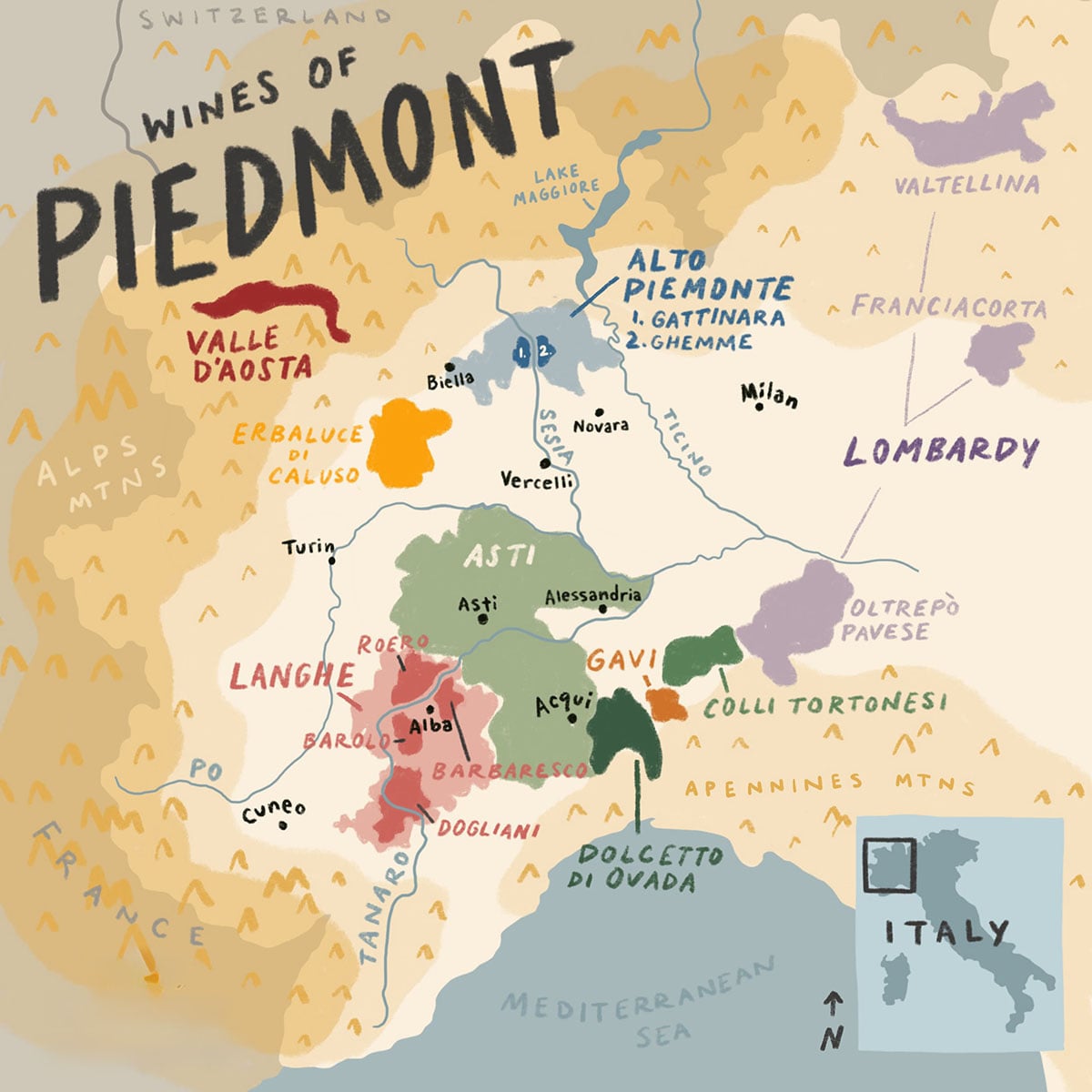
Barolo — the bigger, brawnier one, from a cluster of villages south of Alba. By law it must age at least 38 months, including 18 in wood, before it can be released; Riserva demands 62 months. This is a wine that rewards patience, both from the producer and from you.
Barbaresco — often called Barolo's more elegant sibling. Slightly warmer sites, slightly earlier ripening, shorter minimum aging at 26 months. Not lesser. Just a little more perfumed and approachable a bit sooner.
Nebbiolo also makes excellent, less expensive wine in Roero, and up in the alpine north in Gattinara and Ghemme. If Barolo's price tag makes you flinch, start there.
The Everyday Heroes: Barbera and Dolcetto
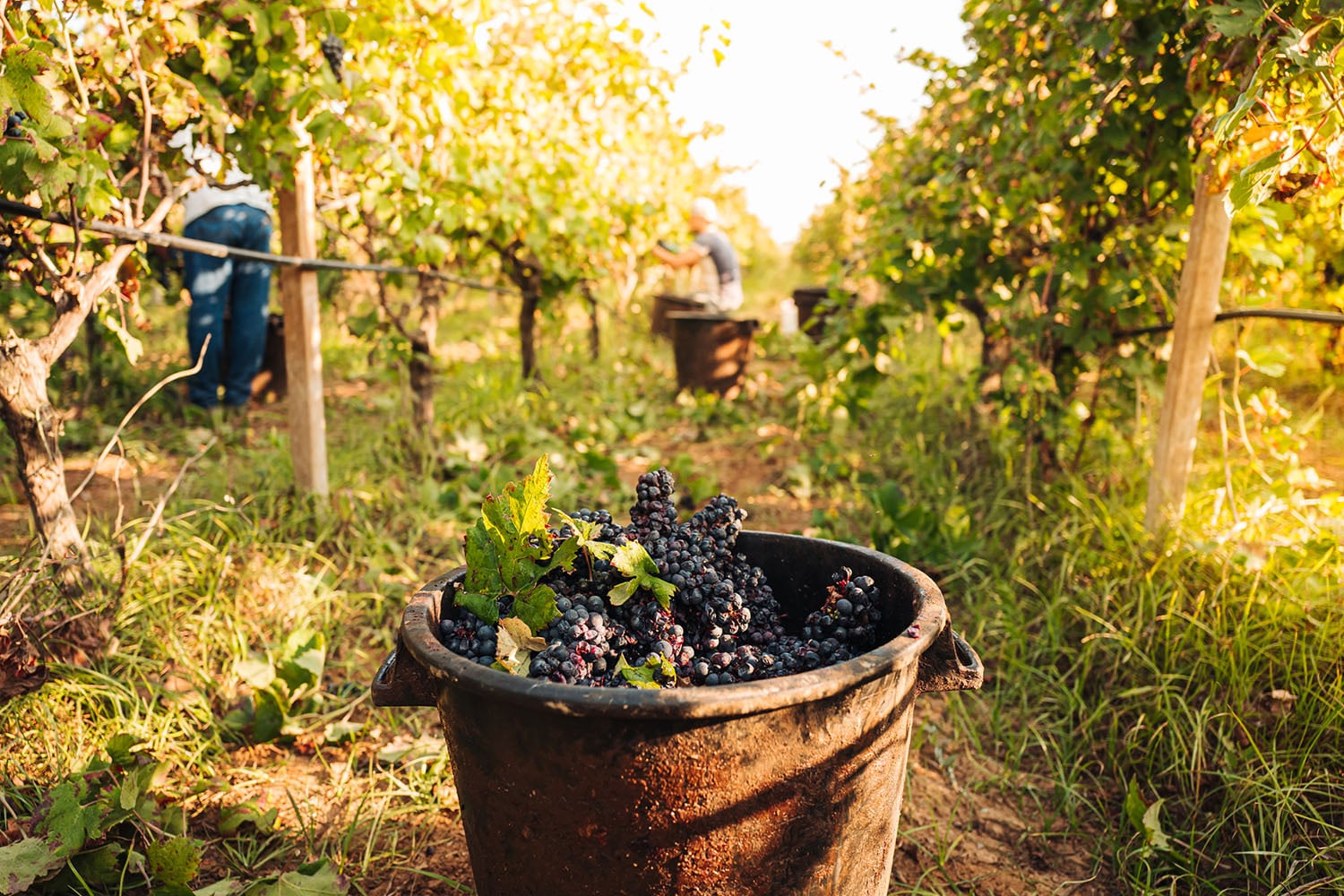
Here's the thing about Piedmont: nobody in Piedmont drinks Barolo on a Tuesday. They drink Barbera.
Barbera is the workhorse and, honestly, the region's most food-friendly red. Deep purple, juicy, packed with black cherry, and blessed with mouthwatering acidity but soft tannins — which means it goes with nearly everything and doesn't fight your dinner. The most classic versions come from Barbera d'Asti, a zone covering some 3,500 hectares across the provinces of Asti and Alessandria. Barbera d'Alba is the other name to look for. Some are aged in oak and quite serious; most are meant to be drunk young and happily.
Dolcetto is the one that ripens first, and it's the least demanding of the three . The name means "little sweet one," but the wine is dry and the sweetness refers to the grape's low acidity. Expect an inky purple color, black plum and blackberry fruit, a faintly bitter almond finish, and grippy little tannins. Chill it slightly. Serve it with salami. Don't overthink it.
Whites, Bubbles, and a Region Quietly Shifting
Piedmont is a red wine region, roughly 44,500 hectares of vineyard, fairly stable over the past two decades, but its whites are having a moment.
The most-planted white grape isn't a dry wine grape at all. It's Moscato Bianco, with over 10,000 hectares under vine, more than three and a half times the plantings of the next white variety. It becomes Asti and Moscato d'Asti: low in alcohol, gently sweet, gorgeously grape-y and floral. Moscato d'Asti in particular is one of the world's most joyful wines and one of the very few that genuinely works with fruit desserts.
Then there's Cortese, the grape behind Gavi; crispy lemon, almond, a natural with the seafood coming up from nearby Liguria. Arneis, from Roero, gives softer pear-and-white-flower whites. And Alta Langa is the region's serious traditional-method sparkling wine, made from Chardonnay and Pinot Noir at high altitude.
All of this sits within an unusually dense web of appellations: Piedmont holds around 19 DOCGs and roughly 40 DOCs, a remarkable share of Italy's national total.
Where to Start
If you're new here, skip the trophy hunt. Buy a Barbera d'Asti and a Dolcetto d'Alba for the week, a Gavi or Arneis for warm evenings, and a bottle of Moscato d'Asti for dessert. Then, when you're ready, find a Langhe Nebbiolo — Barolo's younger, cheaper cousin — and see if that tar-and-roses thing clicks for you.
When it does, you'll understand why Piedmont doesn't need to shout.